
My recent week at a monastery was my third time going on silent retreat. The first two, one in Maine and one in Massachusetts, were more silent than this most recent experience, which I attribute to New Englanders being far more comfortable with ignoring each other than those in other parts of the country are.
The silence of those days wasn’t only about speaking, it was a silence without technology. I left my phone off for five days, attempting to detox from the influence of constant stimulation and observing the monks who, without abstaining from tech entirely, have a much different relationship with it than most of us.
The monks show us what is possible: quiet, simplicity, incremental searching for God day by day, putting God first, resetting the pace, not being a slave to the news cycle or the infinite scroll, not imagining they are needed all the time, not participating in the new relationship economy in which we trade interruptions with one another to maintain the satisfying illusion of our indispensability.
Being apart from it I was able to see the ways that self-enslavement to our screens is truly damaging, and truly a sin. We act as if the mind-numbing is only harmful when it is taking time that would otherwise have been given to virtue—if I scroll when I should be at church, or when I should be praying, or when I should call my mother.
But letting attention be brutalized by nonsense, or even by sensible content addictingly delivered, is self-harm no matter how many rosaries we say to balance it out. It makes me crave what I oughtn’t crave, need what I ought not need, and I go along with the entrapment, swipe by swipe.
Yes, the digital space is where the world is, and most of us are called to live and work in the world, but that engagement requires caution. I never thought I’d become such a purist (and in truth, I’m a purist in theory rather than practice), but it’s hard to ignore that there’s little good about our feeds, or about keeping a flattened world in our pockets. It’s not just the scroll, it’s the access, the constant thirst for exciting interruption, surface stimulation that prevents us from going deeper.
All throughout my time in the silence I had moments of pause, fiddling with my tea bag, staring at religious art. I’d pause from reading or writing or thinking my prayer and gaze off in the distance; often, with time, something would come to me. Perhaps a consolation or an insight, the next sentence of whatever I was writing or a revelation about where God was meeting me. Where would those things have gone if I didn’t leave time for them to emerge?
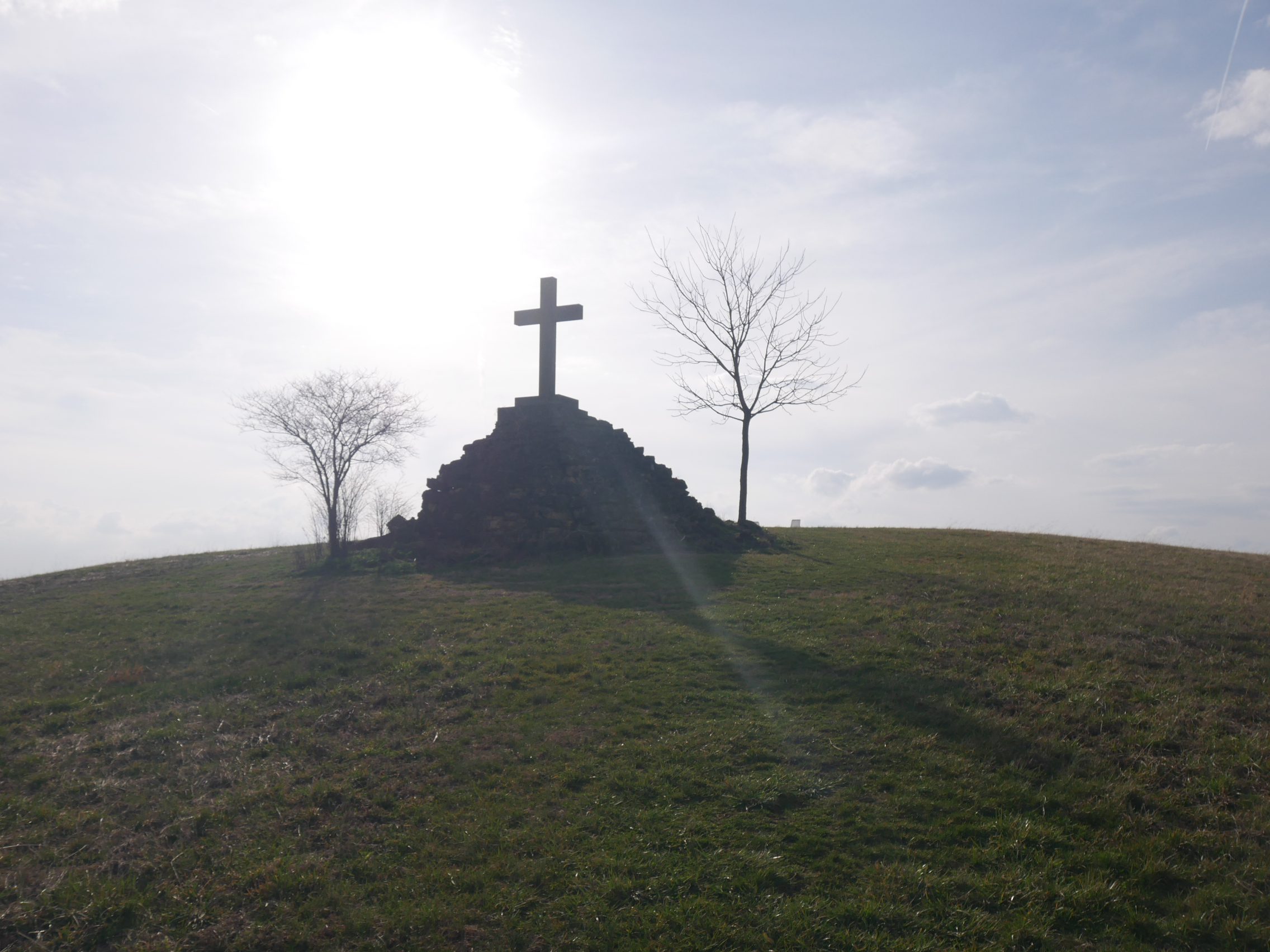
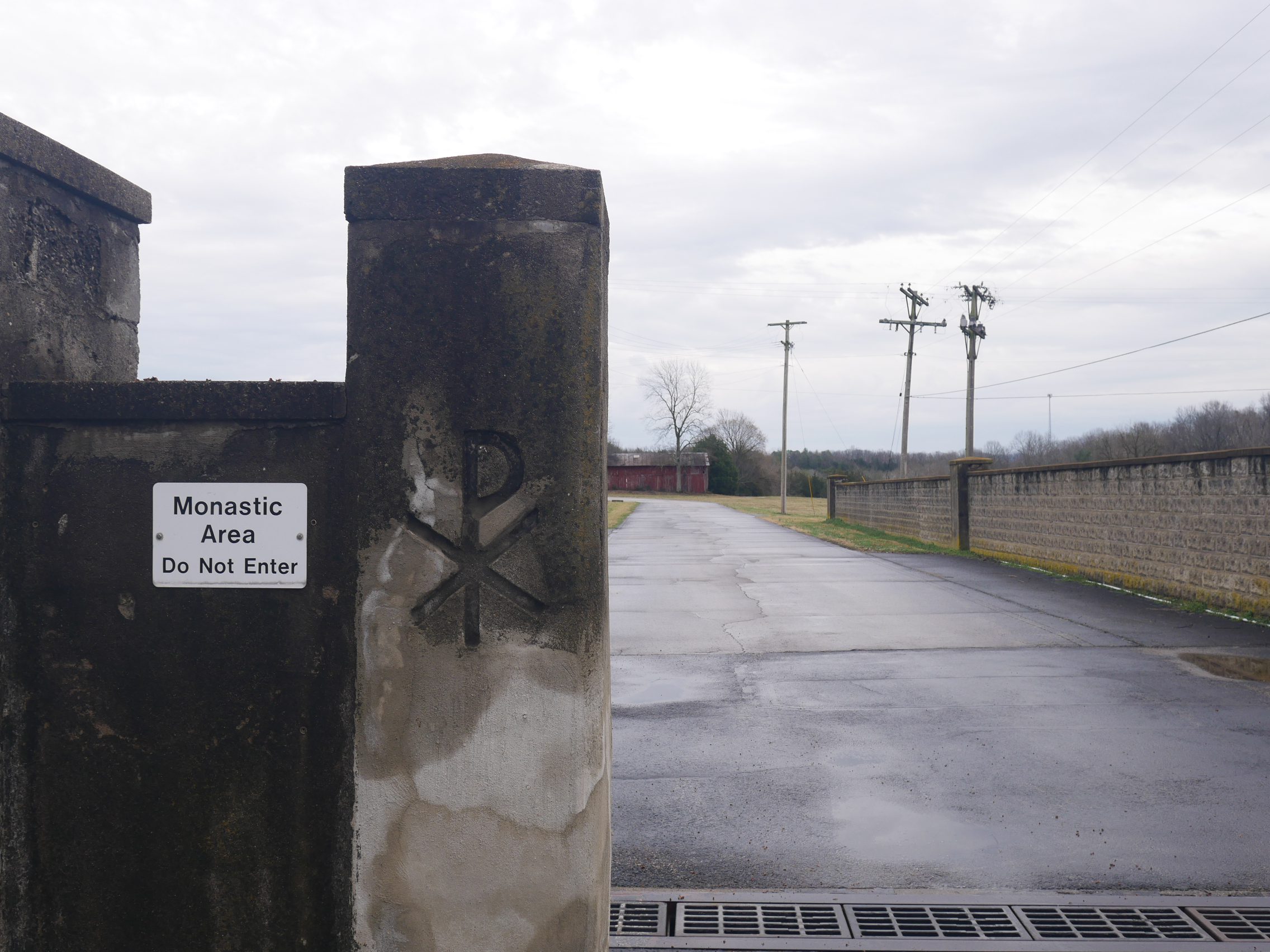
This is the last of my written reflections on my time at Gethsemani Abbey. You can read (or re-read) my thoughts from retreat on Confession, Blending In, and changing light of sunrise.
